Student Success Blog

A Fond Farewell to Sara Montiel

Sara Montiel, Advising and Retention Coordinator for the College of Education and Human Development (CEHD), was the first person I ever spoke with at George Mason University. She made quite an impression with her knowledgeable, friendly demeanor.  I was instantly put at ease and knew that if Mason employees were like Sara, then this was the place for me.  As it turns out, Sara makes that positive impact everywhere she goes, and her next endeavor will surely be no exception. In January, she will be joining the School of Integrative Studies as their new Assistant Director of Student Services. The CEHD Office of Student Affairs (SAA) wanted to pause and highlight Sara’s contributions to the College before we bid her farewell.  While it’s a challenge to get Sara to stop working long enough to chat, especially about her accomplishments, I was fortunate enough to pin her down to answer a few questions.

Yoder: In 2017, you celebrated your tenth year here at Mason. Tell me about your Mason career up to now.

Montiel: In my ten years at Mason, five have been with the Department of Psychology where I served as the Undergraduate Program Coordinator but truly dipped my hand into many different aspects of higher ed. My interest in developing a career in higher ed had its roots in the wide variety of work I did in that office. Simultaneously, I was also pursuing my master’s in educational psychology from CEHD which further developed my interest in the field of higher education and spurred me to obtain a graduate certificate in higher education administration shortly after graduating with my MS. My most recent five years have been split between serving as an academic advisor in the Center for Academic Advising, Retention & Transitions and as CEHD’s Advising and Retention Coordinator. During the past three years I have also been a doctoral student in CEHD, specializing in higher education with a secondary emphasis in educational psychology.
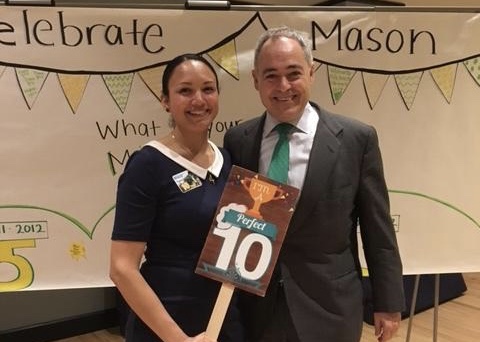
Sara and President Cabrera celebrate her 10th year at Mason

Yoder: Tell me about your new position and how it aligns with your goals?

Montiel: I am joining the School of Integrative Studies to serve as the new Assistant Director of Student Services. This is a great opportunity for me because it will allow me to continue doing what I love – working with and advising students in academic difficulty, and add a new element I’m really excited for, which is having an academic teaching load. 

Yoder: How has your time with CEHD helped you prepare for these new responsibilities?

Montiel: I think every position I’ve held at Mason has prepared and positioned me for the next. The opportunities I’ve had in CEHD in particular, such as representing our college in various campus spaces such as the Undergraduate Advising Liaison group, the university Student Experience Redesign (where I served on the 24/7 Student Service team), the Academic Advising Council and the Mason Academic Advising Network’s Steering Committee, have really enlarged my scope of what’s happening at the university and how it affects students, but at the same time, what’s going on with our students and how we can affect change in the university to better serve them. It’s been really great to be a part of those conversations.

My time in CEHD has particularly prepared me for the new responsibilities of an assistant director by giving me an opportunity (along with my former supervisor, Iris Robinson) to develop and run the CEHD Graduate Advisor Work Group meetings where we meet with program representatives across the college to discuss issues, policies, forms, and updates to anything pertinent to graduate advising. This was so needed at the time as there really wasn’t a platform at the university that pertained specifically to graduate advising and our CEHD programs are so unique, Iris and I knew that whatever our solution had to be CEHD-specific. Thus, the Graduate Advisor Work Group was born and it was a necessary first step to put academic advising on our college’s agenda.

Yoder: What are some professional and personal highlights of your time at CEHD? Do you have a favorite memory?

MontielProfessionally, I’m most proud of establishing the undergraduate Academic Success Program, a requirement for students with a GPA below 2.0 to complete in an effort to support them in returning to good academic standing. Under this advisor-student contract, I worked closely with students in helping them develop their academic goals, identify their barriers to success and connect them to resources and support services on campus. I hope that this can be a sustainable contribution I have made to the college.

The Academic Success Program then highlighted that another area of need for our undergraduates in academic difficulty was supporting those who were returning from first and second academic suspension. The “Back on Track” workshop was created to essentially do that – get students back on track and to help them understand their current academic picture and how they can achieve academic success through tapping into their internal motivations and goal-setting.

My time in the Student and Academic Affairs office will always be near to my heart. While I’ve grown professionally during my time here, I have grown as an individual as well. I welcomed my first child during my first year in the office and have been here during the passing of my mother. I’ve had major life moments occur while an employee in CEHD and a member of the SAA team and I will never forget how warm, understanding, joyful and supportive people have been for me throughout them. I can’t explain how much of a relief it is to have such a human touch at work – it’s a concept I really didn’t expect. That’s my favorite memory.

If Sara has found a warm and nurturing environment in SAA, her co-workers would say that she, too, has played a large part in fostering such a positive workplace. Sara’s supervisor and CEHD Director of Student Success, Dr. Ivory Berry, said, “Sara has been instrumental in representing CEHD on various advising and retention committees and fostering student success. Her passion for students is ever present and her commitment to retaining students who are faced with challenges is unwavering. She has been a great colleague, and I look forward to working with and mentoring her in the future.”

Best of luck, Sara!  We will miss you!

_______________________________________________________________________________________________________________________ 

Meg Yoder is the Office Assistant for Student and Academic Affairs. She develops and manages content for the Student Success Blog.
CEHD Academic Achievement Medal Awarded to Winter PhD Graduates

Winter 2017 PhD Graduates were honored with the College of Education and Human Development (CEHD) Academic Achievement Medal presented by Dean Mark Ginsberg at the PhD Colloquium on Friday, December 8.  The medal is a symbol of the scholarly achievement and overall commitment to the advancement of the field of education demonstrated by the successful completion of the PhD in Education at George Mason University. It is intended to be worn proudly at graduation. The medal also serves as a lifelong reminder to graduates of the high expectations and unwavering standards of the Mason community. The presentation of the medal to PhD Graduates is a fairly new tradition for CEHD that was first introduced at the spring 2017 School of Education Degree Celebration.

Congratulations to the Winter 2017 PhD Academic Achievement Medalists:

Soo Y. Ahn  
Dissertation Title

Using a Mobile-Based Graphic Organizer with Embedded Procedural Facilitation for Idea Generation to Support Persuasive Essay Writing for Middle School Students with Emotional and Behavioral Disorders

Major ProfessorDr. Kelley Regan, College of Education and Human Development


Daniah I. Aleissa 
Dissertation TitleThe Effect of Technology on Saudi Female Students Learning English as a Foreign/Second Language
Major ProfessorDr. Marjorie Haley, College of Education and Human Development


Maha M. Al-Freih 
Dissertation TitleExamining the Relationship between Self-Regulated Learning Processes and Persistence to Goals in Massive Open Online Courses
Major Professor Dr. Nada Dabbagh, College of Education and Human Development


John M. Bordenkecher 
Dissertation TitlePeace Corps Service and the Development of Quality School Leaders
Major ProfessorDr. Beverly Shaklee, College of Education and Human Development


Gordon Brown 
Dissertation TitleThe Effects of an Integrated Curriculum on High School Students’ Achievement and Integrative Thinking
Major ProfessorDrs. Beverly Shaklee and Kimberly Sheridan, College of Education and Human Development


Jennifer Buxton 
Dissertation TitleAn Investigation of the Relationships among High School Students’ Reading Comprehension Strategy Instruction, Strategy Use, Attitudes, and Achievement
Major ProfessorDr. Anastasia Kitsantas, College of Education and Human Development


Mimi Corcoran 
Dissertation TitleThe AP Calculus Exam Reading Experience:  Implications for Teacher Classroom Practice and Student Comprehension
Major ProfessorDr. Jennifer Suh, College of Education and Human Development


Marriam Ewaida 
Dissertation TitleThe Process of Co-Constructing and Implementing a Critical Literacy Unit for English Learners
Major ProfessorDrs. Kristien Zenkov and William Brozo, College of Education and Human Development


Anthony Garces-Foley 
Dissertation TitleCalifornia School Superintendents’ Opinion of LGBT-Inclusive Instruction and the Fair Education Act’s Implementation in 2015-2016
Major ProfessorDr. Penelope Earley, College of Education and Human Development


Nicole Harris-Sealey 
Dissertation TitleUnderstanding How Universities Develop Cooperative Systems to Support International Enrollment Management Activity
Major ProfessorDr. Jaime Lester, College of Humanities and Social Sciences


Melissa Hughes 
Dissertation TitleExamining the Role of Self-Regulated Learning Instruction on the Performance and Self-Efficacy Beliefs of Struggling Writers
Major Professor Dr. Kelley Regan, College of Education and Human Development


Bobbie Jo Kite 
Dissertation TitleFamily Language Policy in American Sign Language and English Bilingual Families
Major Professor Dr. Julie Kidd, College of Education and Human Development


Danielle Kittrell 
Dissertation TitleWhy They Stayed: A Narrative Inquiry of Three Black Women Science Educators
Major ProfessorDr. Toya Frank, College of Education and Human Development


John Knipe 
Dissertation TitleTranslingualism and Second Language Acquisition: Language Ideologies of Gaelic Medium Education Teachers in a Linguistically Liminal Setting
Major ProfessorDr. Rebecca Fox, College of Education and Human Development


Michael Mazzarella 
Dissertation TitleExpectancy-Value Factors, Gender, and Achievement: Is There a Difference Between Algebra and Geometry? 
Major ProfessorDr. Erin Peters-Burton, College of Education and Human Development


Dwannal Wade McGahee 
Dissertation TitleEffects of a Self-Advocacy Intervention on the Performance of High School Students with Learning Disabilities when Requesting Academic Accommodations
Major ProfessorDr. Margaret King-Sears, College of Education and Human Development


Sophia Ra 
Dissertation TitlePreservice Teachers’ Entering Beliefs and Preconceptions about Teaching for Social Justice
Major ProfessorDr. Gary Galluzzo, College of Education and Human Development


Matthew Ragone 
Dissertation TitleAssistant Principals’ Perceptions of Student Progress Goals and their Impact on Instructional Leadership
Major ProfessorDr. Diana D’Amico, College of Education and Human Development


Lauren Serpati 
Dissertation TitleThe Impact of Secondary Teachers’ Motivational Beliefs on Their Intent to Accept Brain-Based Teaching
Major ProfessorDr. Anastasia Kitsantas, College of Education and Human Development


Sarah-Jane Thomas 
Dissertation TitleUsing Technology to Facilitate Language Acquisition of English Language Learners
Major ProfessorDr. Beverly Shaklee, College of Education and Human Development


Jessica Turner 
Dissertation TitleWho they are Within: Females’ Experiences of Empowerment Programming in India
Major ProfessorDr. Beverly Shaklee, College of Education and Human Development

Shernelle Rey: Patriot on a Voyage!

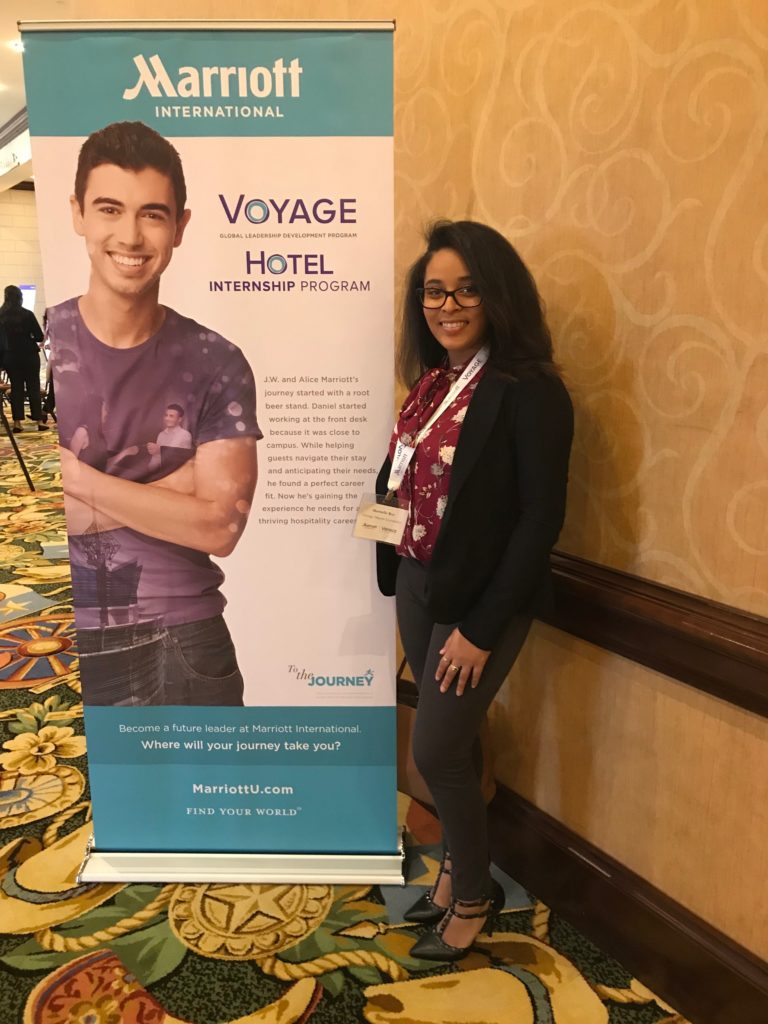
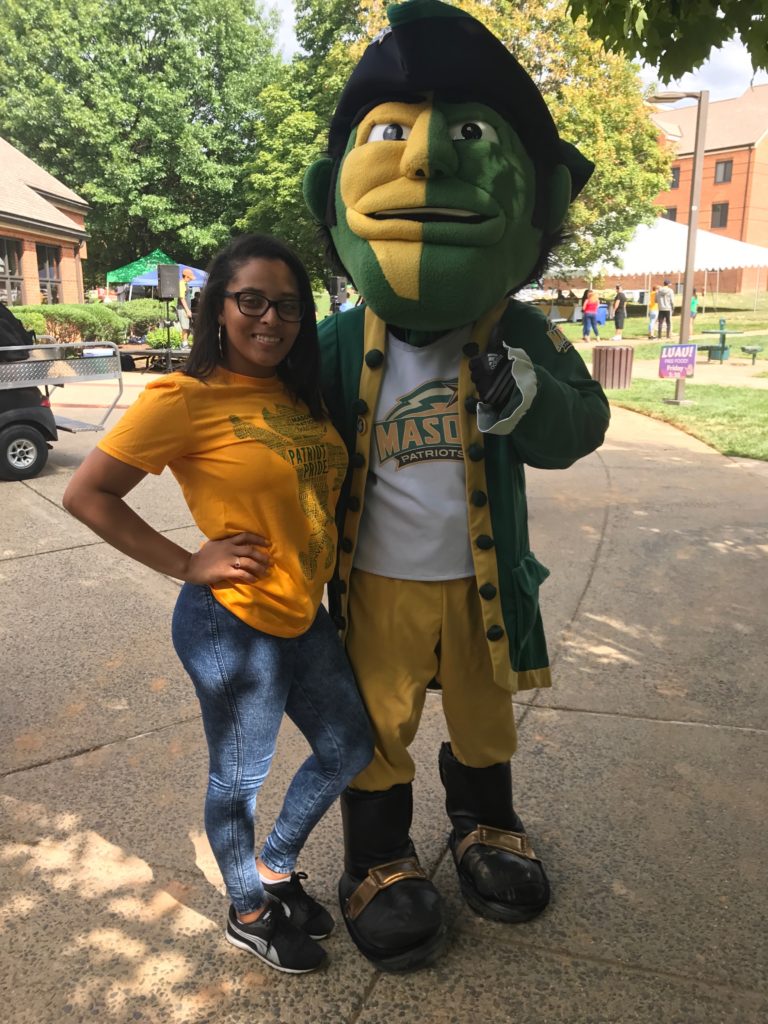
College of Education and Human Development (CEHD) students are always making #MoneyMoves to prepare for life after college. Shernelle Moneé Helena Rey, a Tourism and Events Management senior, is no different. Native to the US Virgin Islands, Shernelle has been selected to participate in Marriott’s Voyage Global Leadership Development Post Graduate Program (Voyage).

Voyage is Marriott’s competitive international and award-winning global leadership development program that offers resources and support to future leaders of the company across Marriott’s hotel brands. Shernelle expressed, “I am excited to learn through the curriculum and simulations the ins and outs of the Events department as well as the other areas throughout the hotel. I am also excited to be a part of the Marriott Family. I have always wanted to work for Marriott from such a young age!”

The Voyage program allows participants to immerse themselves in the operations of a hotel through mini departmental rotations. Participants receive hands-on training in accounting and finance, culinary, event management, food and beverage, human resources, rooms operations, and sales.

Shernelle contributes her competitiveness in the applicant pool for the Voyage program, and her success at Mason in general, largely to the faculty, staff, and peers who have supported and encouraged her to be more involved on campus and to always do her best.

Shernelle, who is set to graduate in May 2018, has been putting the skills she’s learned from her major courses to good use during her time at Mason. She was the spring 2017 Academic Events Assistant for the Office of Student and Academic Affairs, helping with the coordination of several CEHD signature events, including the Student Research Symposium, Degree Celebrations, and Writer’s Retreat.

Shernelle has also held leadership positions in the Caribbean Student Association and Patriot Activities Council. Through these organizations, she helped coordinate a plethora of programs including, but not limited to, fashion shows, cultural festivals, philanthropic events, and awareness campaigns.

We asked Shernelle to offer some advice for future Mason students. She replied, “Make sure to get as much experience as you can within the industry because it can benefit you in the end! Always follow your passion and don’t let anyone tell you that you can’t do it, because you can do anything you put your mind to!”

Congrats on your Voyage, Shernelle! We are very proud of you!

The 2300 Weekly Digest, Week of December 3, 2017

As the fall semester winds down, we bring you the last weekly digests until the new year. 

Dr. Get-Your-Life-Together says, “Conjure up some courage!”

Writing is an intense and vulnerable process that can conjure up feelings from relief to self-doubt, leading one to question: “When will I have time to write this?” “Do I have to share this with someone?” “Will the reader like my ideas?” “Is that sentence perfect enough?”

A few weekends ago I was privileged to witness 30 master’s and doctoral students, currently pursuing degrees in various CEHD programs, publicly commit to achieving short-term writing goals at the CEHD Writer’s Retreat. This was the second time the CEHD Office of Student and Academic Affairs (SAA) hosted a Writer’s Retreat for our graduate students. During this 8-hour retreat, attendees participated in two interactive mini workshops around goal setting and navigating databases and did some extensive writing. The retreat was ideal for students needing accountability, dedicated space, minimized distraction, and assistance from writing consultants to receive feedback on their writing and to help get unstuck.

Writing comes easy for some people, while others struggle to generate written products of high quality. As the saying goes, “the struggle is real.” Although waking up at 6:00am to ensure an arrival on campus by 7:00am and staffing an event until 5:00pm isn’t my ideal way to spend a Saturday, it’s warming, inspiring, and affirming to be in the company of students publicly declaring with their physical and mental presence and words, “I need help.”

Writing is an intense and vulnerable process that can conjure up feelings from relief to self-doubt, leading one to question: “When will I have time to write this?” “Do I have to share this with someone?” “Will the reader like my ideas?” “Is that sentence perfect enough?”

While staffing the Writer’s Retreat check-in, a young lady walked up to the table to find her nametag amongst the sea of nametags and noticed other recognizable names. She expressed with joy, “I’m so happy to see that there are other PhD students who signed up to be here! I thought I was going to be the only one.” In that moment, she reminded me of the courage it took for her and others to fill out the registration form to attend the retreat, to actually show up, and to also sign up to meet with a writing consultant for additional help.

I want you to know that we see you and understand the vulnerability and courage it takes to ask for help, particularly with your writing, from getting started to finding accountability partners and receiving feedback on your product. These recurring thoughts, feelings, and actions are all part of the process of learning, growing, and developing into scholars and professionals.

Here are three tips to reducing writing anxiety:

  1. Give yourself permission to be a student. Sometimes we are so focused on presenting ourselves as a scholar who has it all together. Thus, we get stuck on writing the perfect sentence(s), share only what we self-determine as a written “masterpiece” for initial review, and express difficulty in being receptive to any critical feedback. Give yourself permission to spend time in the “lab” being a student: an inquisitive learner and becoming scholar.
  1. Accept feedback as a sign of respect. Learning that the masterpiece you’ve written has flaws can crush your spirit. Page after page you see heavy track changes or red ink spewed all over your document. In that moment, you can ignore the feedback, defend your product, or choose to be receptive to the reviewer’s suggestions for improvements. It’s is so easy to write off a reviewer as “out to get you” because they ripped your paper to shreds. However, I would argue that the more feedback you receive the better. It’s not very often that you’ll meet someone who is willing to invest their time, especially if it’s at no charge, in giving you extensive feedback. Critical feedback is necessary to strengthening your scholarship. Find a few good colleagues, mentors, or advisors who are willing to invest in you. Give them your writing projects and let them have at it! You’ll greatly benefit in the end.
  1. Keep showing up. We will continue to provide spaces and opportunities, such as the Writer’s Retreat, to aid in your writing process and, more broadly, your scholarly development. We ask that you keep showing up, not just to our retreats but to your own “retreats”. When you’re feeling knocked down, defeated, rejected, incompetent, and/or unmotivated, tap into your inner champion and get back up and go back at it one more time. Don’t stop showing up for yourself and the folks who are invested in you!

That’s all for now.

Peace and blessings.

Dr. Ivory Berry, also known as “Dr. Get-Your-Life-Together,” is the Assistant Dean for Student Success for the College of Education and Human Development. He shares his no-nonsense wisdom every day in the Office of Student and Academic Affairs, and occasionally, here on the Student Success Blog.