
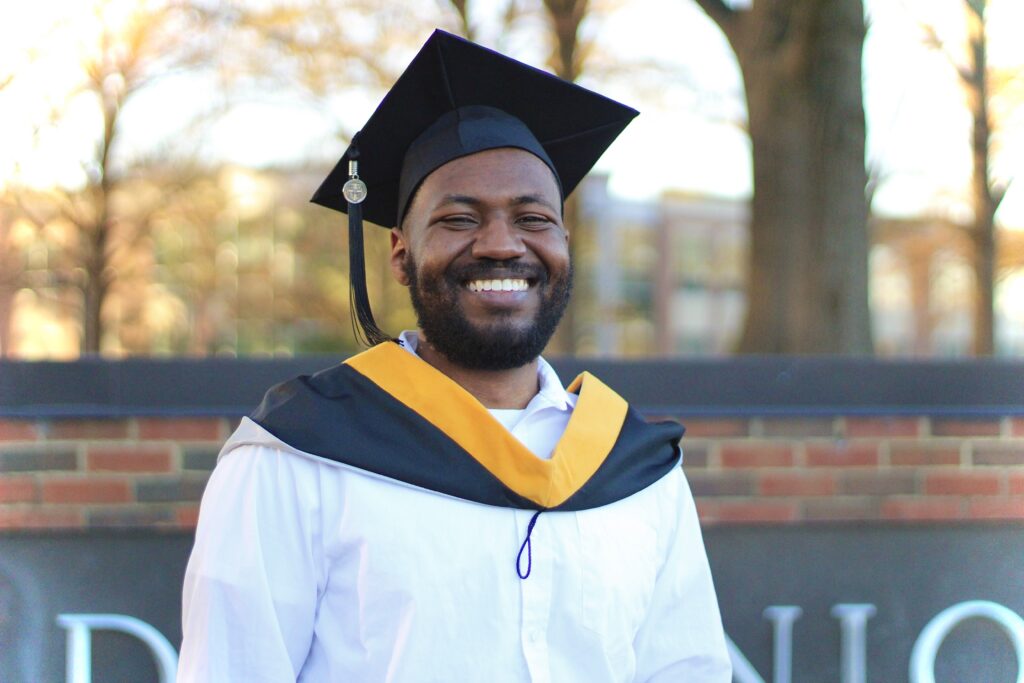
This blog post was written by Graduate Success Fellow Harris Davis. Harris Davis is a graduate student in the School Psychology Program at George Mason University. Keep reading to learn more about his seven graduate school tips!
You can schedule a meeting with me using this link to get connected to the right resources or discuss any concerns about grad school!
Instructions for scheduling the meeting:
- Log in after clicking the link above
- Select the green box that says “Schedule Appointment”
- Select the “Graduate Success Fellow Meeting” option
- Select virtual
- At the bottom of the pop-up window select “Check Next Available Dates” or click the calendar icon beside the current day of the week and date
- Press the arrow facing down beside my name “Harris Davis” and select a time
- Scroll down and enter in a brief description of what you would like to talk about during the meeting.
I am also available to meet in-person. Email me at [email protected] to schedule!
1. There is no rush to start graduate school, so move at your own pace.
When I was applying to grad school, I felt pressure to figure my life out quickly and start a program immediately after finishing undergrad. I have met people who come from a wide range of backgrounds and experiences during grad school. Some students have changed careers after years in the workforce, while others transitioned directly from undergraduate study into graduate school. Because everyone’s path is so different, it’s easy to start comparing yourself to others and questioning whether you truly belong. These comparisons often lead to feelings of imposter syndrome, especially when you assume that others are more prepared, confident, or qualified. When you feel ready, apply! Apply even if you feel like an “imposter”. Enrolling into a program at your own pace could be an opportunity to save money for graduate school (especially if you can live at home for an extra year or two) and spend time with friends and family.
2. There are so many resources on campus and you’re paying for them so use them.
The Office of Fellowships helps students find funding. You don’t even need prior knowledge to visit this office – they will do their best to set you up with funding.
For support with mental health and overall well-being, there are several on-campus resources. At some point during grad school, you may start to feel burnt out, and you can utilize TimelyCare, which is a virtual, 24/7/365 Talk-Now Service for students. This resource and others can be found here.
The University Life page has many resources. The goal of University Life is to support student success and foster a strong sense of belonging and school pride. It promotes a safe, values-based community that prepares students to succeed on and off campus. More information on resources can be found at the bottom of this page.
The Ombuds Office fosters a respectful and supportive environment at George Mason. It offers independent, confidential, and impartial services like consultation and mediation. It is available to all members of George Mason’s community for guidance and support.
George Mason’s Health Services offers quality and affordable health care for all George Mason students. They offer a wide range of services from help with quitting tobacco/nicotine, to basic checkups. Student can enroll in George Mason’s health insurance to help with the cost of health-related services if they are in need of insurance.
There are so many more resources on campus that assist with the majority of issues students will face during their time here at George Mason.
3. Talk to your professors about opportunities.
They are extremely knowledgeable and it can often feel more comfortable talking to them before utilizing an on-campus resource. Professors are often aware of on-campus and off-campus opportunities like jobs/internships and career opportunities. Building professional relationships early can open the door to a wider range of opportunities.
4. Get a comfortable and consistent work space.
My first set up at home did not work for me so I made changes, like getting a bigger desk and another monitor, which improved my productivity. Having an enjoyable space to work helped keep me motivated when working on assignments. It’s worth it to invest in an at-home work space. I also recommended finding a place on-campus and off-campus to work. I personally like working in the library on-campus near the large windows. Graduate students also have a space on the fifth floor with great spaces to work. For working off-campus, I suggest finding a library or coffee shop near where you live. I find that the less I work in my room, the better. Bedrooms should be maintained primarily as spaces for rest and relaxation, free from unnecessary distractions to promote a healthy work-life balance.
5. Get a couple friends.
Making friends with my classmates helped make grad school worth it. The Northern Virginia and D.C. area has events for almost every interest or passion. There are also free events every weekend that can be easily found on social media for those looking to save money. D.C. is a very popular destination for musicians as well. I’ve seen many of my favorite music artists with my friends and we have eaten delicious food all over the DMV! We help each other out by working together and sharing ideas. Plus, we’re always ready to offer moral support to each other when it’s needed.
6. Limit your screen time.
It’s so easy to spend all day on screens during grad school, especially with the increase in online classes. Finding an offline hobby or two that doesn’t require screens can really help with winding down. For me, learning to draw from books has been my way to unwind at night before bed. Try anything other than ending the day on your phone as this can lead to worse sleep hygiene.
7. Eat breakfast.
It may seem small, but that energy from breakfast goes a long way. The high-level thinking required for grad school may not be the same as exercising, but it still burns calories.
During high-level chess tournaments, players can lose up to 12 pounds over 10 days just from their high-level thinking. Grad school may not be exactly the same as a chess tournament, but the daily problem solving and critical thinking required for grad school needs to be fueled even if you feel like you’re not more active than usual.