
New semester, new year – Welcome back CEHD peers!
As we step into a new semester, I want to begin with a simple truth. Coming back to campus does not always mean coming back fully rested. Some of us are energized. Some of us are still tired. Some of us are excited. Some of us are already feeling the weight of what this semester may carry. Wherever you are starting from, I want to invite us to begin this term grounded in care for ourselves and one another.
In my earlier adulthood, I learned that I had a default code. When life and school felt heavy, I told my body to push through. To be strong. To keep going. To rest later. Over time, I realized that I had trained myself to ignore the warning signs my mind and body were sending me.
I am still unlearning that.
I now see that I was ignoring what my body had been trying to say. Instead of ignoring those messages, I should have been exploring them more. I should have been leaning in and listening to my body and its messages much more.
Our ‘mental health dashboard’
Lately, I have been thinking about how similar our bodies are to our vehicles. Many of us have seen the check engine light or the change oil notification (or that symbol with the tire and the squiggly line under it). We see the warning, and honestly, many of us say we will deal with it later.

I have done that. And every time I waited, the issue grew. It cost more. It demanded more. My body finally showed me that the same thing happens with our mental and emotional warning signs.
Last semester, the lights on my own mental health dashboard started blinking. My mood was shifting. My patience was thinning. My interest in things I usually enjoy was fading. What really caught my attention was the sudden heaviness and tightness in my chest. It happened more than once. It even happened in the middle of laughing and running around Chuck E Cheese with my two boys. My partner saw me holding my chest and gently asked, “Babe are you okay?”
That was the moment I finally said the truth and found freedom, relief in doing so:
“No babe. Actually, I am not okay.”
It felt strange to say it out loud. I am known for being the one who keeps going. The one who handles what needs to be handled. The one who is always alright. Admitting that I was not okay felt like pulling the emergency brake on a story I had been telling myself for years. My body had reached a point where ignoring the signs was no longer an option. I scheduled a doctor’s appointment. I battled fear and stigma to reach out to resources to schedule my first therapy appointment. I learned I could begin sessions through my health insurance. Part of me felt like I had crashed into a wall I used to force myself to climb over without stopping to breathe.
One thing helped me more than anything. I talked about it.
The importance of talking and engaging with others
I was nervous to tell my faculty because I did not want it to affect how they saw me as a student. Instead, I experienced compassion, understanding, and real guidance that helped me make decisions that honored both my well-being and my academic responsibilities. Speaking my truth brought an exhale I did not realize I had been holding.
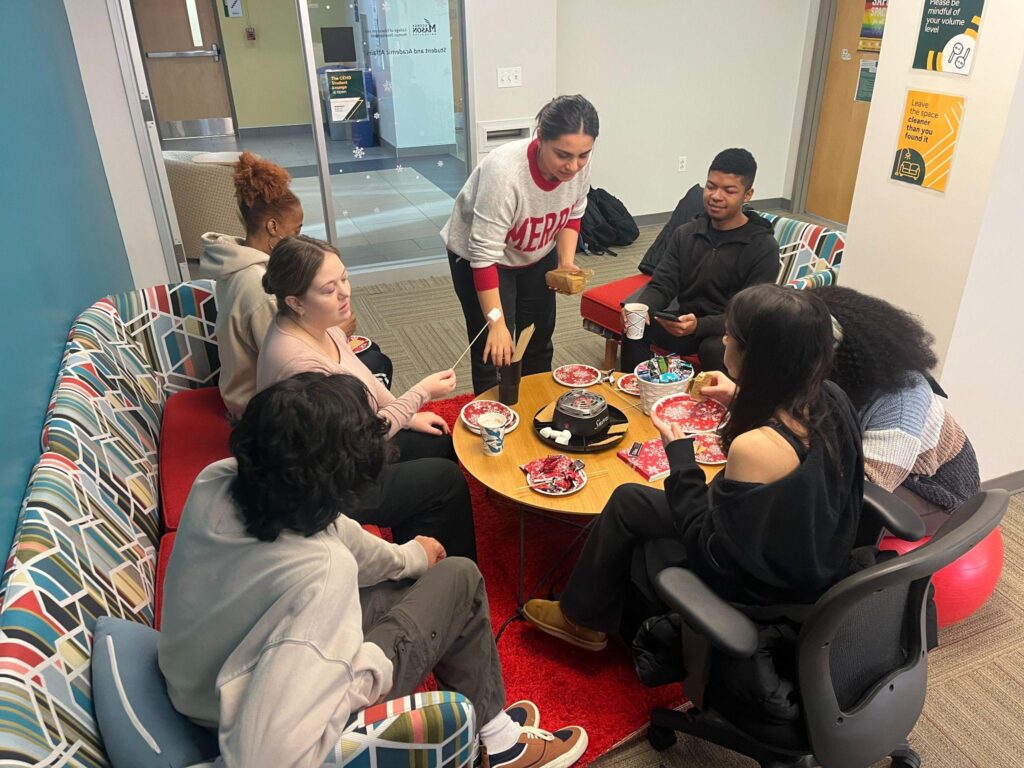
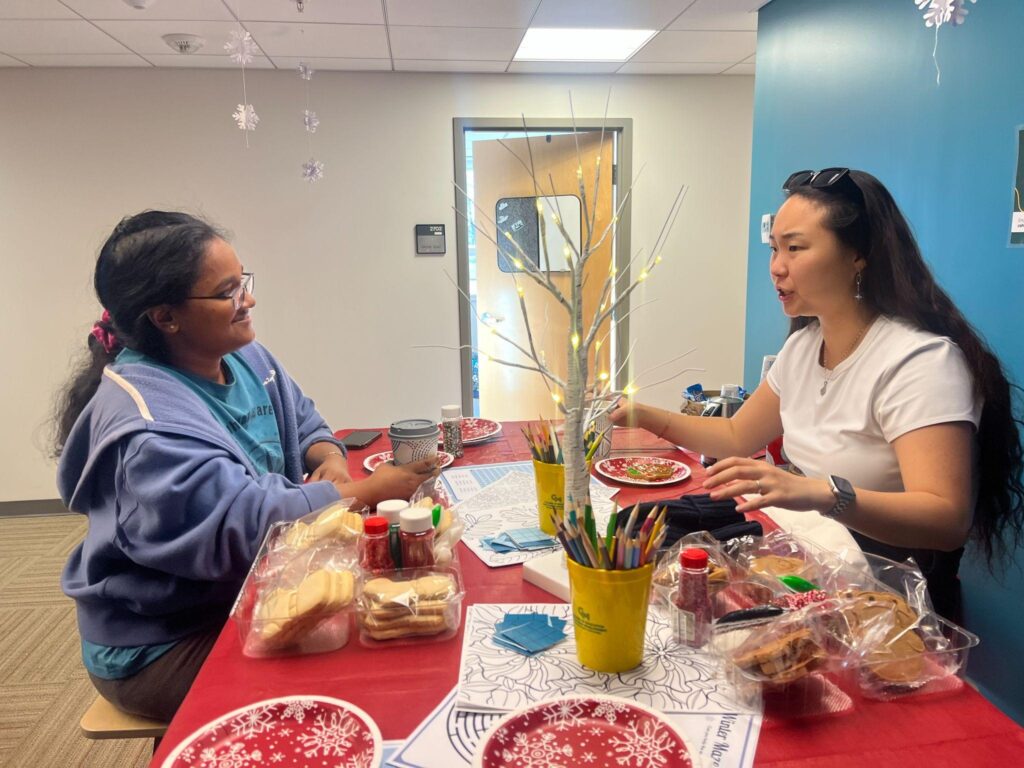
I also went to the CEHD De-Stress event back in December. I did not know how much I needed that pause. Being with other students, laughing about the chaos of finals, making s’mores, coloring, decorating cookies, sharing how we were really doing, all of it reminded me that community is a resource too. We study different things, but we are still here for one another.
As a full-time doctoral student and full-time professional, I also had to face the reality that I did not know all the mental health resources available to me, if any at all. And I know some of us may be in the same place. Many of us grew up in families or communities where getting help came with judgment or stigma. I had to unlearn the belief that my only job was to be strong. I had to hardwire a new internal code.
My friend, do not ignore the warning signs.
Explore them.
Honor them.
Respond to them.
When I visited Counseling and Psychological Services (CAPS) in Sub I on the Fairfax campus, they caringly reminded me of the many supports available to students. One resource that surprised me was TimelyCare. Students have twenty-four-hour access to services like TalkNow, health coaching, scheduled counseling, and self-care content through the website or the mobile app.
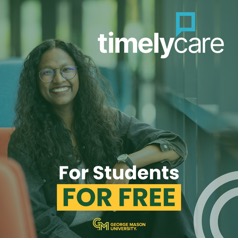
I was also glad to learn that TimelyCare has a number of tools for faculty and staff too, including twelve counseling sessions. I will definitely be making use of that.
The bottom line
Mental health is real.
It touches each of us differently. It can show up as exhaustion. Irritability. Anxiety. Numbness. Sleeplessness. A tight chest. A heavy spirit. Or a feeling you cannot quite name. None of those things mean you are weak. They are simply lights on the dashboard asking you to pay attention.
As we begin this new year together, please remember that you have a community here at George Mason.
You have people who care.You have resources designed to support you. My hope for us this semester is that we not only work hard, but that we listen well — that we care for ourselves with the same intention we give our commitments.
Take good care of yourselves and one another, CEHD family. You deserve it.
Demarcus Merritt, Sr.
Assistant Director of Residence Life
Housing & Residence Life | George Mason University
Doctoral Student, PhD in Education (Higher Education)
College of Education and Human Development
About the author

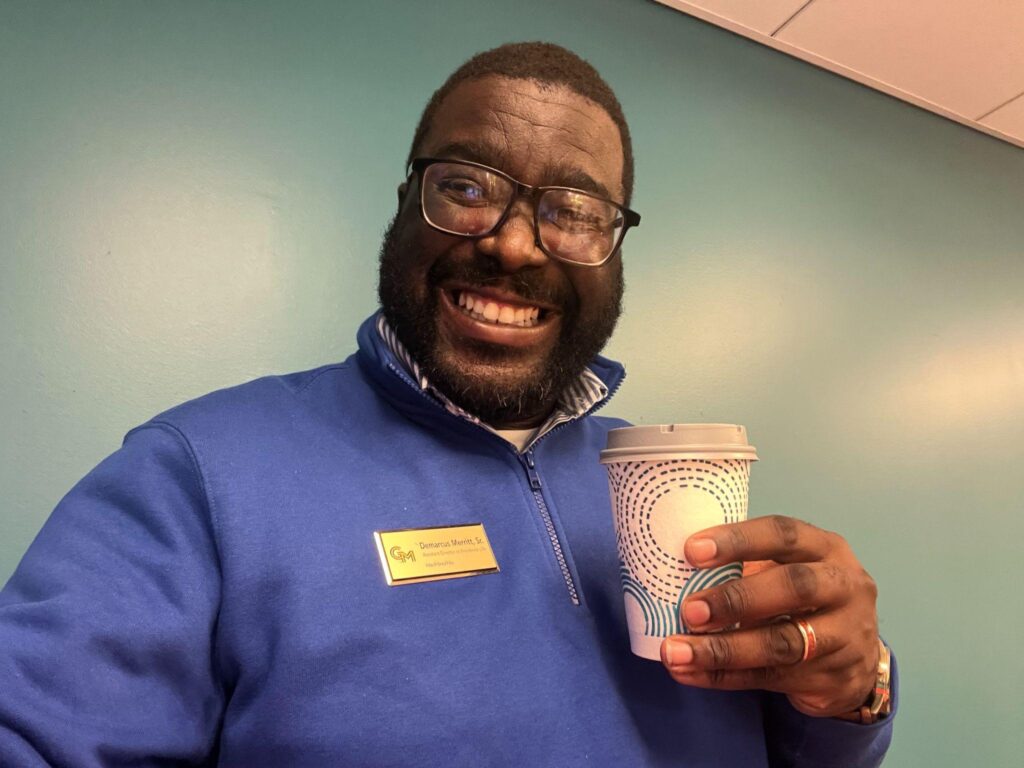
Demarcus Merritt, Sr. (he/him) is a doctoral student in the PhD in Education Program specializing in Higher Education. His research interests include the history, persistence, and global contributions of Historically Black Colleges and Universities, and studying the lived experiences of first-generation Black students across HBCU and PWI contexts. He is also interested in the often overlooked stories of non-traditional students, including two-year college transfer students, and how they navigate their higher education pathway to persistence. Demarcus serves as the Assistant Director of Residence Life at George Mason University. His most joy-serving identities include being a Black man, a husband, and a father of two Black boys and one heavenly daughter. When he is not in class or working on campus, you can often find him enjoying time with his family and friends, traveling, and watching/attending college sporting games; particularly college football. Currently he serves as the President of the Virginia Association of College and University Housing Officers (VACUHO) Governing Council, Chair-Elect of Mid-Level Leadership Institute for the Association of College and University Housing Officers – International (ACUHO-I), and is a member of the CEHD Student Advisory Board.