Student Success Blog

The Story Behind Our Formula

Be informed. Be Engaged. Be Present.

The Student Success Formula

Five years ago, I interviewed for the inaugural CEHD Director of Student Success position. As part of my interview process, I was asked to prepare a job talk on current trends in student affairs and a sample welcome message that I would deliver at a new, undergraduate transfer student orientation. I knew that preparing the job talk would take some time since I needed to research current trends and think about a succinct way to deliver the presentation; but, on the other hand, I knew that crafting the welcome message was going to be a cakewalk! 

Two years prior, I was fresh out of doctoral studies at Illinois and had relocated to Ohio to assume a full-time student success position working with exploratory/undeclared students, new transfer students, and students who were not in good academic standing. Retention and graduation rates were pretty abysmal to be frank, and I was given the tall order to develop approaches and initiatives to improve those rates. Rather than assume that the students were not academically prepared for college or were unmotivated to earn a degree, as too often folks do in their instant analysis, I sought to understand their lived experiences and how they connected (or didn’t connect) to the university, including its structures, policies, resources, services, personnel, and academic programs. I quickly learned that students were not in sync with the university and vice versa. 

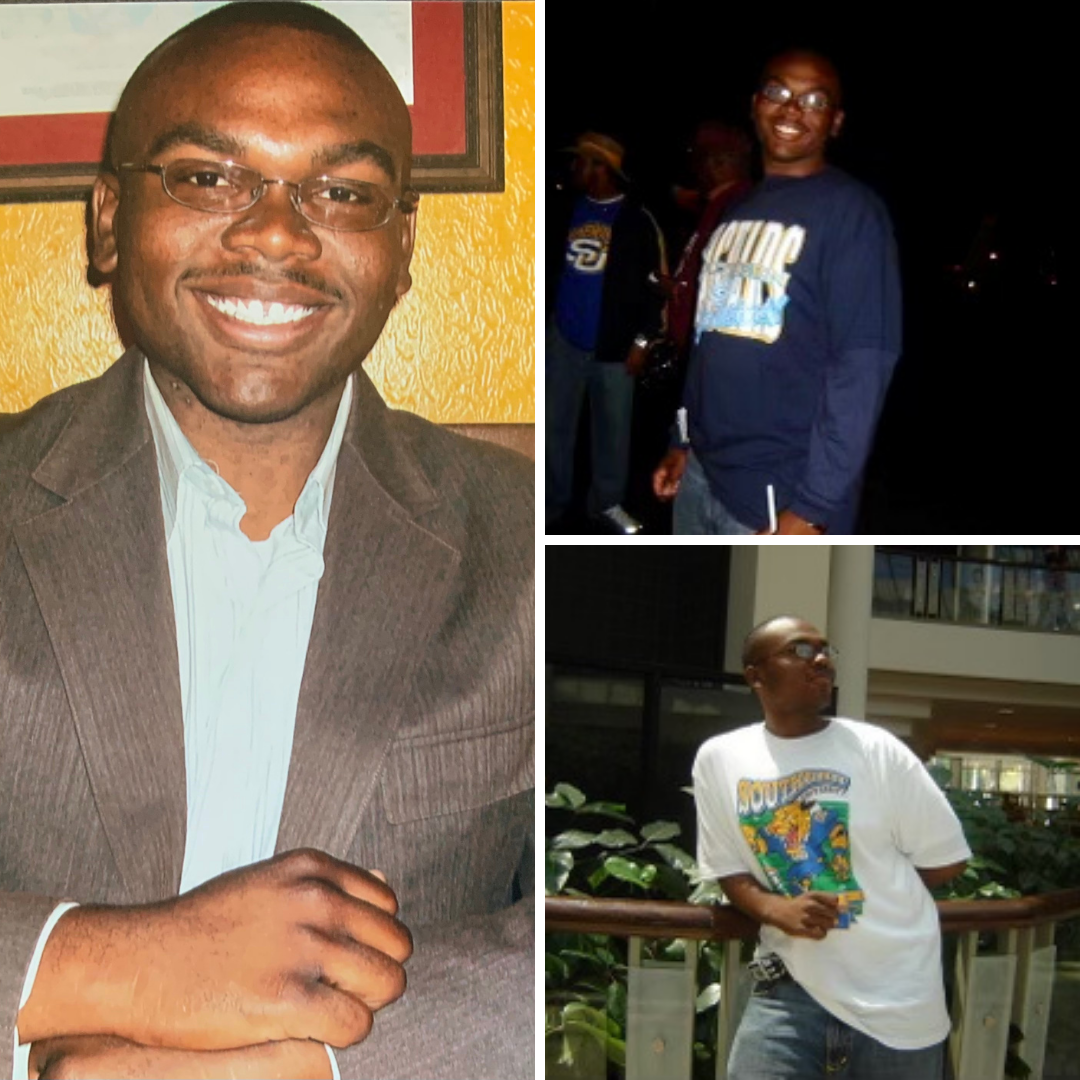
I was lucky to have had my undergraduate experience at a nurturing Historically Black College and University (HBCU) in Louisiana. Though we had limited resources, we had highly supportive and engaged faculty, staff, upperclassmen, and alumni who showed us the way; they synced us to the university. I’ll never forget running into my mathematics department chair, Dr. Meyinsse, on “the strip” in between classes after returning from summer break following completion of my freshman year. He asked, “Berry, what did you do this summer?” I replied with glee, “I went home and got plenty of rest, hung out with my friends, and caught up on my favorite tv shows!” “And what else?” he asked. “That was it! It was great!” I responded. He leaned in towards me with direct eye contact, like only a parent could, and said, “make that your last summer at home just resting and hanging out. Berry, you need to be in a summer program and involved in activities preparing for life after undergrad.” Admittedly, I was a bit confused because as a first-generation college student, I thought taking the right classes was all that I needed to focus on to earn my degree and obtain a job offer or a graduate admissions letter.  

That’s me as an undergrad at Southern University and A&M College

He gathered my whole life in an instance! He was the lifeline that I didn’t know I needed. I spent a lot of time with Dr. Meyinsse, and others at the university, who instilled in me the expectation to “stay in the know” and encouraged me to become a Ronald E. McNair Scholar; attend and present at research conferences; go to sporting and social events at the school; serve in leadership roles in various clubs and organizations; get involved in student government; join the honors program; and form study and peer support groups. I even became a student ambassador and led campus tours for prospective students and their families and spoke at admissions events. I probably over did it, but I was fully plugged in to the university, highly engaged, and simply having the time of my life. Oh, and I got admitted to and enrolled in the doctoral program at Illinois immediately following completion of undergraduate studies! 

Unfortunately, I wasn’t witnessing this motivation, engagement, or sentiment in my students in Ohio. However, I quickly realized that what they needed was a Dr. Meyinsse, so I became him for them.  

I knew that if I could encourage them to plug in to the university by staying abreast of policies and deadlines; checking and responding to their emails in a timely fashion; and reviewing their degree audits and course syllabi regularly that they would be in a better position for success. So many of them were missing assignments, advising appointments, and opportunities to appeal decisions because they were disconnected. They had no clue what was going on at the university!  

I knew that if I could get them to see beyond the degree audit and realize what it would take to be a competitive applicant with a diversified portfolio of experiences to land a job in their field or admission to an advanced degree program that they would then see the value in being engaged inside and outside of the classroom.  

I knew that if I could get them to think about their areas of academic, professional, and personal strength and challenge and identify associated resources to aid in their development then they would want to explore all that the university has to offer to support their matriculation and wellbeing. 

So, whenever my students would ask, “Dr. B., what I need to do to successfully make it through?” I always channeled my inner Dr. Meyinsse, “Be informed; Be engaged; and Be present—both inside and outside of the classroom; that’s the formula for optimal student success.” Dr. Meyinsse didn’t use those exact words, but it captures the spirit of his words and what I took away from our conversations and ultimately simplified to make shareable and actionable.  

Fortunately, I didn’t just leave that message with my students in Ohio. I brought it with me in my new transfer student orientation welcome message for my interview at Mason and have shared it countless times with students, faculty, and staff ever since.  

You’ve seen the student success formula on our swag. You’ve heard it in our presentations. We’ve even plastered it on the main wall in the CEHD Student Success Center. We’ve fully embraced it, and I urge you to do the same…because Dr. Meyinsse said so. 
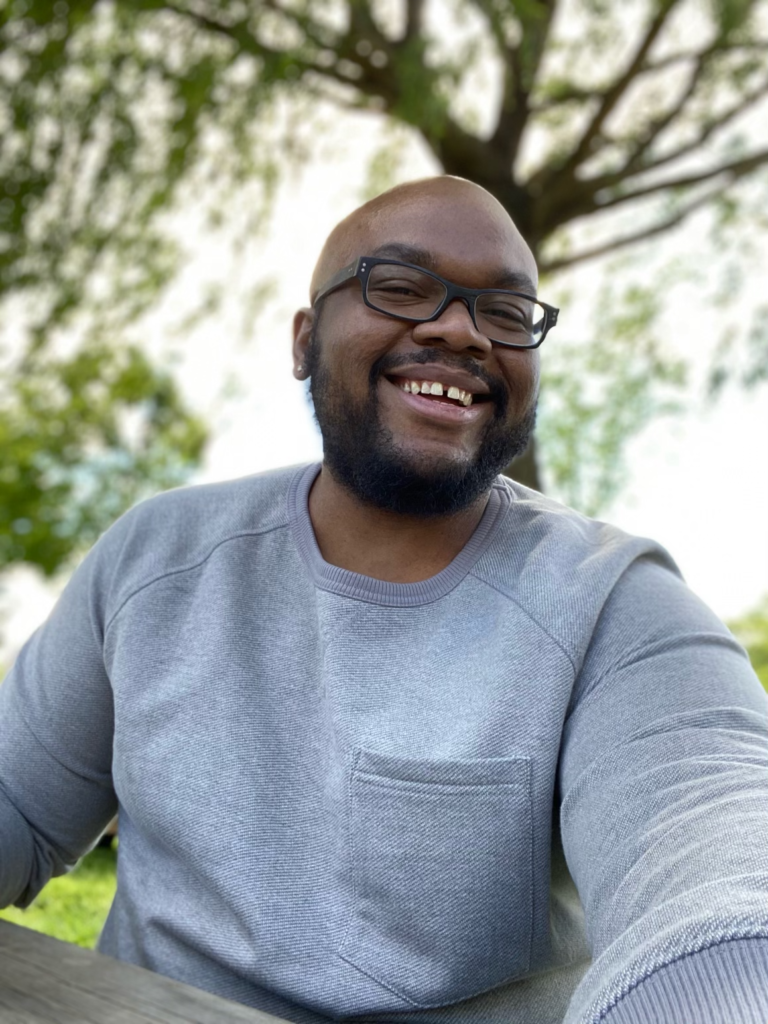
Dr. Ivory Berry, also known as “Dr. Get-Your-Life-Together,” is the Assistant Dean for Student Success for the College of Education and Human Development. He shares his no-nonsense wisdom every day in the Office of Student and Academic Affairs, and occasionally, here on the Student Success Blog.
Allow Us to Reintroduce Ourselves

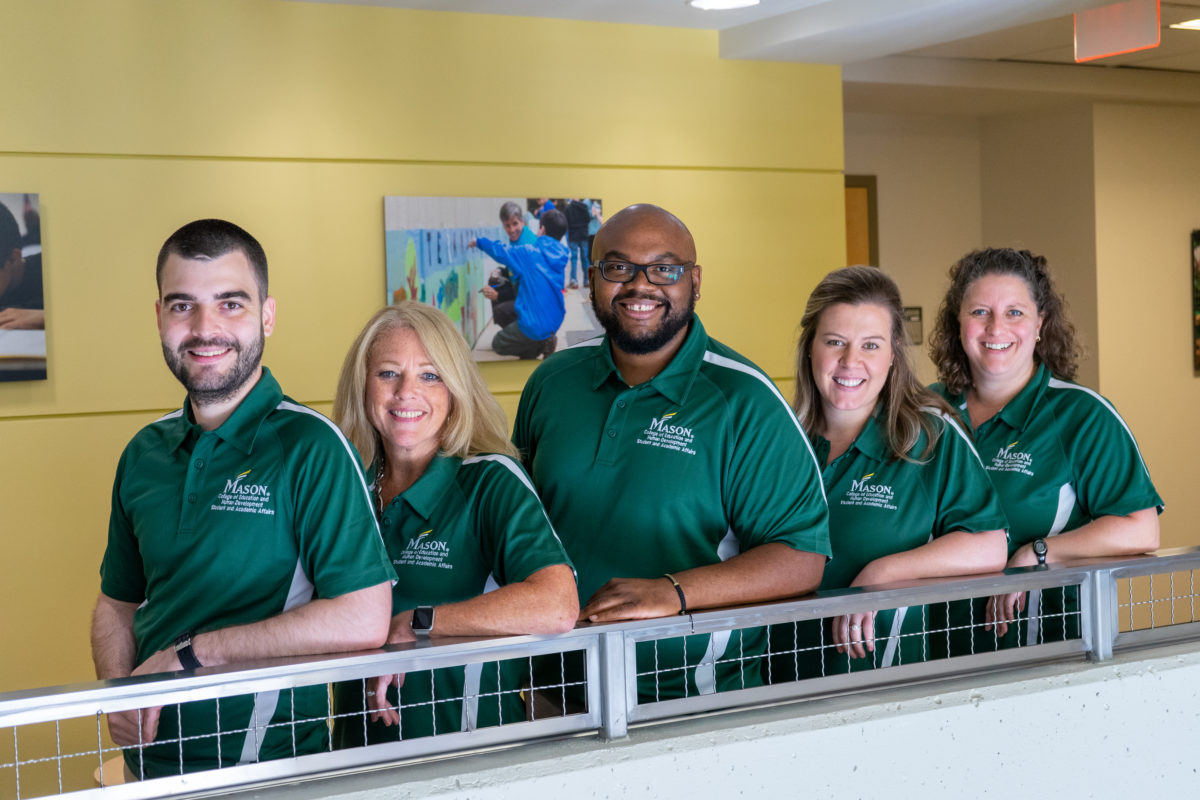
The Student Success Team: (L-R) Stephen Vaughan, Chris Creswell, Dr. Ivory Berry, Brianna Alford, and Jocelyn Callister; not pictured: Dr. Ellen Rodgers and Meg Yoder

Borrowing from the lyrics of iconic American rapper and entrepreneur (and Beyonce’s husband), Jay Z’s hit song “Public Service Announcement,”  ALLOW US TO REINTRODUCE OURSELVES: We are the CEHD Student Success Team, and we are located in the newly designed CEHD Student Success Center in suite 2200 Thompson Hall on the Fairfax campus. 

For those of you who have been around the college for a while, “Student Success Team” and “Student Success Center” may sound like fairly new concepts. However, if you’re familiar with Student and Academic Affairs, aka SAA, then there’s no breaking news here!  

Our mission is still the same

We support the teaching, scholarship, and service missions of the College by onboarding new students, facilitating enrollment and retention, addressing barriers to success, adjudicating appeals and grievances, awarding scholarships, coordinating enrichment activities and celebratory events, such as the student research symposium and graduation, and providing a broad range of informational, advising, professional development, financial, and support resources.   

We’ve just retooled, rebranded, and relocated.   

In summer 2019, the Student Success Team accepted the offer from the dean to move down the hall to the suite most recently vacated by our Admissions colleagues in order to make way for the college to stand up the new TEACHERtrack@Mason office in suite 2300 Thompson, our previous home. Though it was bittersweet to depart our old digs and suitemates, we eventually leaned into the possibilities of what could be in our new, collaborative space. But first, the new space needed some major work to fit our needs and personalities! For starters, we needed an additional office space to fit the full team, and we needed more of an open floor concept given the collaborative nature of our team; thus, out with the cubicles and in with a new front desk workstation and a large conference table and a wall-of-whiteboards to give our ideas room to grow. We also needed color and freshness so the space would be inviting to the students who are at the heart of all we do. 

Don’t get it twisted, the “new stuff” didn’t arrive the next day, or for that matter, the next year! We got played a few times and really learned what it means to have pandemic patience!  

It took TWO YEARS to finally get the space right and we are ready to share it with our CEHD community, including students, faculty, and staff!  

Join us on Monday, August 30 from 1:00 pm – 3:00 pm or Tuesday, August 31 from 9:00 am – 11:00 am for our official CEHD Student Success Center “Open House”. Stop by to grab a treat and some swag; check out the space; and share a few hellos and air hugs.  

We are still in a pandemic, so all COVID 19 protocols will be in effect in accordance with state, local, and Mason policies.   

Learn more about the CEHD Student Success Center at https://cehd.gmu.edu/saa/student-success-center/ 

Dr. Ivory Berry, also known as “Dr. Get-Your-Life-Together,” is the Assistant Dean for Student Success for the College of Education and Human Development. He shares his no-nonsense wisdom every day in the Office of Student and Academic Affairs, and occasionally, here on the Student Success Blog.
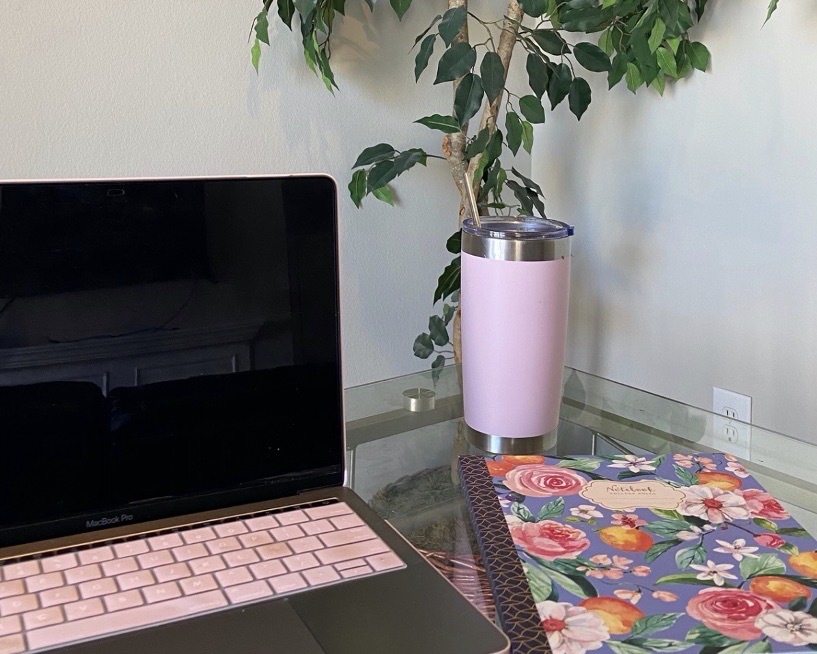
What’s so important about time management anyway?

Beginning October 11, CEHD’s Student Success Team will be offering a 4-week on-demand Academic Success Toolkit on the topic of Time Management. Check your Mason email every Sunday for links to the latest Toolkit installment in The 2200 student news digest.  Today we wanted to share an excerpt from the first installment:

Time management is the way in which you organize your time spent on tasks set forth for each week, day, or hour.  Time management can either make or break your experience on anything in life, from getting ready and getting to dinner with your friends to completing a mid-term assignment.  What you do with your time minute-to-minute may seem small, but when we magnify those minutes into hours, and hours into days, the management of that time becomes your life.  It is likely you have already implemented a time management toolkit into your lifestyle, but let’s take an inventory of those skills to build them, strengthen them, and continue to evolve them.

Time management is a skill that will always be shifting.  The time you have to manage changes with each phase of life and how you do so will change in accordance to your new goals.  Where your time is being spent should be reflective of where you want to go next.  Thus, as a graduate student, new or returning, the way you manage your time this year will be different from the last.  This is why it is important to know how to assess your management skills and make them fit for you.  

Before managing time, you need to manage your supporting skills.  Do you know what is ahead of you?  Without the organizational skills to be aware of your expectations, there is nothing to manage except free time.  Not only should you be organizing your thoughts, but also your priorities.  The prioritization of tasks will lead you to manage your time most effectively and allow structure even on your most time-crunched days. Consider balancing responsibilities as an essential time management tool for your schedule and your wellbeing.  Remember, “no” is a one-word sentence.  Unexpected requirements will rear their ugly heads, but knowing where and when to opt-out can help you organize, prioritize, and manage your time.    

Lastly, your personal preferences are a key player in your time management toolkit.  Maybe you are a list person.  Maybe you keep everything in your smartphone.  What about a planner!?  The important thing is that you know what works for you on day one, and also what is still working for you on day 152 of the semester.  Time management is not a one-size-fits-all set of tools, but a customizable toolkit put together with an assortment of skills and concepts.   

Successful time management will look and feel productive, will harness just the right amount of stress to ignite motivation, and will likely result in a formed routine.  However, be aware that being busy does not always imply productivity.  Be sure that your managed time is distraction-free and that your free time, while still managed, doesn’t bleed into your production hours.  Take inventory of your time to know where you are spending it and what your hours look like.  Use this Time Management Toolkit to get a grasp of where you are, where you are going, and exactly how you want to get there.  The foundational skills ahead of you will help you move forward successfully in your personal life, in CEHD, and moving forward.

Dr. Get-Your-Life-Together: Progressing in a Pandemic

As celebrators of the new year, we hadn’t envisioned a 2020 filled with so much trauma, death, aloneness, loss, grief, and disruption. 

As the clock of 2019 wound down, the ball in New York City began to drop, and celebrators began to sing “Should auld acquaintance be forgot and never brought to mind? Should auld acquaintance be forgot and days of auld lang syne?”. At long last, the year 2020 had arrived! A year that many, including myself, had proclaimed would be “the year of perfect 20/20 vision!” 

For many, the start of a new year is a time to reflect, restore, renew, and recommit. And perhaps, you started the year off doing just that. You cracked open that new journal with a dedication to write and self-reflect each day. You made a vision board with your friends while sipping on mimosas and eating chicken and waffles. You finally renewed that gym membership and went to the grocery store and bought the freshest of fruits and veggies and maybe even committed to a new vegan, paleo, or keto lifestyle. You even promised to finally give up your vice, say “yes” to vacation invites with the crew, spend more time loving on your family, and excel in your academic studies, not settling for anything less than an A.  You were set and focused. 

And then came March.   

“Wear a mask!” “Hey you, maintain 6 feet social distance!” “Wash your hands!” “Disinfect everything!”  “Cancel your vacations!” “Quarantine!” “Self-isolate!” “Zoom!” “Unemployment.” “Closed.” “Stay at home.” “Essential workers only.” “Furlough.” “Cancel. CANCEL. CANCEL.”  

COVID-19, a deadly virus, began spreading rapidly throughout the world, fundamentally altering and disrupting everything that we once considered normal and heightening feelings of anxiety, paranoia, and depression.   

As celebrators of the new year, we hadn’t envisioned a 2020 filled with so much trauma, death, aloneness, loss, grief, and disruption. 

But alas, here we are. Four months remaining in the year. Slowly, but surely, regaining our vision and walking cautiously into a new normal.  

If nothing else, this year has (re)taught me the value of: 

  1. The selah (se-lah): A call for a break, a pause [or breath] to restore, reflect, recreate, and revive 
  2. The celebration: An acknowledgment of all of the moments, no matter how big or small, in-person or virtual, for self or for those dearest to me, for I don’t know what tomorrow holds 
  3. The silver lining: Hope in the midst of chaos, confusion, gloom, and, yes, even a pandemic  

As we continue to put one foot in front of the other, making sense of the new world around usbe encouraged that:  

  • Yes, we are still in a pandemic. But, we can still have purpose.  Go grab that journal, my friend! 
  • Yes, we will experience some disruption. But, we can still dream.  Pull out that vision board, sis! 
  • Yes, we may face some trauma. But, we still have the capacity to thrive.  Tap into your reservoir of resiliencemy brotha!  
  • Yes, we may get weary. But, we can still be restored.  Get some rest and then smash those resolutionsy’all! 

And finally, 

  • Yes, you may be meeting in-person, online, or hybrid for your classes this semester. But, the university is OPEN(!), and you can still make adequate progress toward a timely degree completion!  So, show up!  Ace those exams!  Write those papers! 

For one day, you’re going to look back and reflect on how you managed to progress during a pandemic. 

“We’ll tak a cup o’kindness yet for days of auld lang syne.”  

Dr. Ivory Berry, also known as “Dr. Get-Your-Life-Together,” is the Assistant Dean for Student Success for the College of Education and Human Development. He shares his no-nonsense wisdom every day in the Office of Student and Academic Affairs, and occasionally, here on the Student Success Blog.

The Playlist for Success

As I sit in the spare bedroom of my townhome, the sound of AC/DC fills my house.

Am I listening to AC/DC while trying to work from home?

No. 

Is rock and roll noise pollution? 

It is when you cannot control your neighbor’s playlist volume! 

The thought, “Can you at least wait until 5:00 pm!” runs through my mind. 

How can I manage to get through my to-do list when I cannot tune out of the Best of the 80’s?!

Personally, I need something to help me get back to work and quickly!  Here are some tips I like to use. Try them to keep your distractions at bay:

Grab the headphones 

Classical music is a great way to mask other noises while continuing to be productive, or to give your workspace a lively feeling.  Check out this CEHD Concentration Station playlist!

25 minutes on, 5 minutes off

Like our bodies, our brains need breaks to function best!  Check out this Pomodoro Playlist that is designed for 25 minutes of music that promotes focus followed by five minutes of fun for a break!  

Throw the phone away

After you have your playlist going toss your phone to the other side of the room!  When one thing disrupts us, we are likely to allow that to take us down a rabbit hole of distractions.

Celebrate what you have accomplished

When you have that Friday feeling celebrate another week well-done with CEHD’s Mood Booster playlist!     

Remember to have some grace with yourself and others during this time.  You are not just studying at home, you are at home trying to study during a health crisis.  Try to set yourself up to block out those sometimes-unavoidable distractions.  When it seems like too much, reach out to the Student and Academic Affairs Office.  We can help you find the right tracks to keep you on beat!

All playlists created on Spotify by the CEHD Student Enrichment Coordinator, Brianna Alford, and our star intern Brooke. For some reason, no AC/DC was included.

Spotify is a free service in no way affiliated with or endorsed by George Mason University or CEHD.