Student Success Blog

Dr. Get-Your-Life-Together says “Make 2018 the Year of You”

As we prepare to close out and move into a new calendar year, my challenge to you, and quite frankly to myself, is to make 2018 our year of “yes”, but more specifically, the year of saying “yes” to ourselves.

Producer extraordinaire and creator of ABC’s Scandal and Grey’s Anatomy, Shonda Rhimes, released a book in 2015 called Year of Yes: How to Dance It Out, Stand in the Sun, and Be Your Own Person. The book is a reflection of Shonda’s life during a time in which she challenged herself to say “yes” to everything that scared her. Shonda, an introvert in its truest form, was often criticized by her family for never saying “yes” to anything. She took the criticism to heart and decided to use it as a wakeup call to not be afraid to live, accept she doesn’t have to be in control, and to open herself up to opportunities and risks that have the potential to take her personally and professionally to places unimagined and unexplored. 

As we prepare to close out and move into a new calendar year, my challenge to you, and quite frankly to myself, is to make 2018 our year of “yes”, but more specifically, the year of saying “yes” to ourselves. I recall a few years ago when I was preparing to graduate from undergrad and was gearing up for graduate studies, I received a lesson in learning that I was not in control and that if I wanted the most for me, I needed to say “yes” to some things that were either scary or unknown. More specifically, I had been accepted to pursue graduate studies at the University of Illinois at Urbana-Champaign, 700 miles away from my home in Louisiana, and was considering declining the offer in order to continue working with the McNair Scholars program at my undergraduate institution, Southern University and A&M College. The irony is that I was a McNair Scholar, too, and the purpose of the program is to prepare promising first-generation, underrepresented students for doctoral studies. I was so focused on preparing “my” scholars for doctoral study that I had not given myself the attention I needed to get myself together. Further, I didn’t want to leave my friends, family, and culture. I was comfortable with life the way it was…even though I was broke! However, I soon learned that part of choosing “you” is growing comfortable with being uncomfortable. As such, with the support of my family, friends, and faculty mentors, I ultimately decided to choose me. 

I packed whatever could fit in my car, printed out directions to Illinois via MapQuest, and rode into the sunset, or rather the cornfields. Honestly, I had never heard of the University of Illinois; I had only become familiar with the University months prior when a recruiter visited my undergraduate institution and encouraged me to apply. In addition, I had no relatives in the area, had never visited the state for vacation, and had never taken a 12-hour road trip alone. Who would have known though that during my time at Illinois I would make lifelong friends turned family; meet faculty and staff who didn’t know me but wanted to pour into me encouragement and wisdom; take on leadership roles on campus and within the broader community; receive multiple assistantship opportunities along the way; and develop a blossoming personality and genuine care and compassion for others, especially students…the ones everyone loved as well as the ones who everyone had given up on and didn’t think could succeed?

Professionally, I’ve continued to say “yes” to things and opportunities that scare me, like moving to Ohio and later, Virginia. However, I’ve realized that although I’ve become more open to saying “yes” to the things that scare me or the unknown, I’m not always as good at saying “yes” to me, or rather choosing me first. At times, I become consumed by this thought of choosing me first, and it often keeps me up at night or wakes me out of my sleep (By the way, it’s 4am and I’m writing a blog because this topic was consuming my thoughts and not allowing me to sleep). During the past summer, I remember arriving home from the office late one night, and I sat on the couch fully exhausted. This happens from time to time, given that I’m really an introvert who has learned to “perform” being an extrovert over the years, and it appears and “feels” normal. As such, at the end of the day, I’m usually drained from performing and need alone time (about a 1/2 hour) to recharge my internal battery. However, on this particular occasion, I remember sitting on the couch for several hours and my internal battery was still on 10%. Needless to say, I didn’t go into the office the following day, as I had nothing to give. My cup was empty. It is typically my goal to pour into others, particularly students and staff, as often as I possibly can. But, how can one pour into others if their cup is empty or only half full? This may seem like a “selfish” act; it is, and that is okay. Just as the flight attendant instructs passengers to put their oxygen mask on first so you can breathe before helping others, the same goes for making sure you have something in your cup before trying to pour into others.

With that being said, I’m excited for the next couple weeks. I need to recharge my internal battery and hydrate so I can continue to pour into others, especially students and staff. I encourage you to do the same this winter break, so you can be prepared to not only pour into others in the new year but to also get ready to say “yes” to experiences and opportunities that scare you, including saying “yes” to YOU because you are worth it. 

Joyous holiday season to all. 

Dr. Ivory Berry, also known as “Dr. Get-Your-Life-Together,” is the Assistant Dean for Student Success for the College of Education and Human Development. He shares his no-nonsense wisdom every day in the Office of Student and Academic Affairs, and occasionally, here on the Student Success Blog.

Dr. Get-Your-Life-Together says, “Conjure up some courage!”

Writing is an intense and vulnerable process that can conjure up feelings from relief to self-doubt, leading one to question: “When will I have time to write this?” “Do I have to share this with someone?” “Will the reader like my ideas?” “Is that sentence perfect enough?”

A few weekends ago I was privileged to witness 30 master’s and doctoral students, currently pursuing degrees in various CEHD programs, publicly commit to achieving short-term writing goals at the CEHD Writer’s Retreat. This was the second time the CEHD Office of Student and Academic Affairs (SAA) hosted a Writer’s Retreat for our graduate students. During this 8-hour retreat, attendees participated in two interactive mini workshops around goal setting and navigating databases and did some extensive writing. The retreat was ideal for students needing accountability, dedicated space, minimized distraction, and assistance from writing consultants to receive feedback on their writing and to help get unstuck.

Writing comes easy for some people, while others struggle to generate written products of high quality. As the saying goes, “the struggle is real.” Although waking up at 6:00am to ensure an arrival on campus by 7:00am and staffing an event until 5:00pm isn’t my ideal way to spend a Saturday, it’s warming, inspiring, and affirming to be in the company of students publicly declaring with their physical and mental presence and words, “I need help.”

Writing is an intense and vulnerable process that can conjure up feelings from relief to self-doubt, leading one to question: “When will I have time to write this?” “Do I have to share this with someone?” “Will the reader like my ideas?” “Is that sentence perfect enough?”

While staffing the Writer’s Retreat check-in, a young lady walked up to the table to find her nametag amongst the sea of nametags and noticed other recognizable names. She expressed with joy, “I’m so happy to see that there are other PhD students who signed up to be here! I thought I was going to be the only one.” In that moment, she reminded me of the courage it took for her and others to fill out the registration form to attend the retreat, to actually show up, and to also sign up to meet with a writing consultant for additional help.

I want you to know that we see you and understand the vulnerability and courage it takes to ask for help, particularly with your writing, from getting started to finding accountability partners and receiving feedback on your product. These recurring thoughts, feelings, and actions are all part of the process of learning, growing, and developing into scholars and professionals.

Here are three tips to reducing writing anxiety:

  1. Give yourself permission to be a student. Sometimes we are so focused on presenting ourselves as a scholar who has it all together. Thus, we get stuck on writing the perfect sentence(s), share only what we self-determine as a written “masterpiece” for initial review, and express difficulty in being receptive to any critical feedback. Give yourself permission to spend time in the “lab” being a student: an inquisitive learner and becoming scholar.
  1. Accept feedback as a sign of respect. Learning that the masterpiece you’ve written has flaws can crush your spirit. Page after page you see heavy track changes or red ink spewed all over your document. In that moment, you can ignore the feedback, defend your product, or choose to be receptive to the reviewer’s suggestions for improvements. It’s is so easy to write off a reviewer as “out to get you” because they ripped your paper to shreds. However, I would argue that the more feedback you receive the better. It’s not very often that you’ll meet someone who is willing to invest their time, especially if it’s at no charge, in giving you extensive feedback. Critical feedback is necessary to strengthening your scholarship. Find a few good colleagues, mentors, or advisors who are willing to invest in you. Give them your writing projects and let them have at it! You’ll greatly benefit in the end.
  1. Keep showing up. We will continue to provide spaces and opportunities, such as the Writer’s Retreat, to aid in your writing process and, more broadly, your scholarly development. We ask that you keep showing up, not just to our retreats but to your own “retreats”. When you’re feeling knocked down, defeated, rejected, incompetent, and/or unmotivated, tap into your inner championand get back up and go back at it one more time. Don’t stop showing up for yourself and the folks who are invested in you!

That’s all for now.

Peace and blessings.
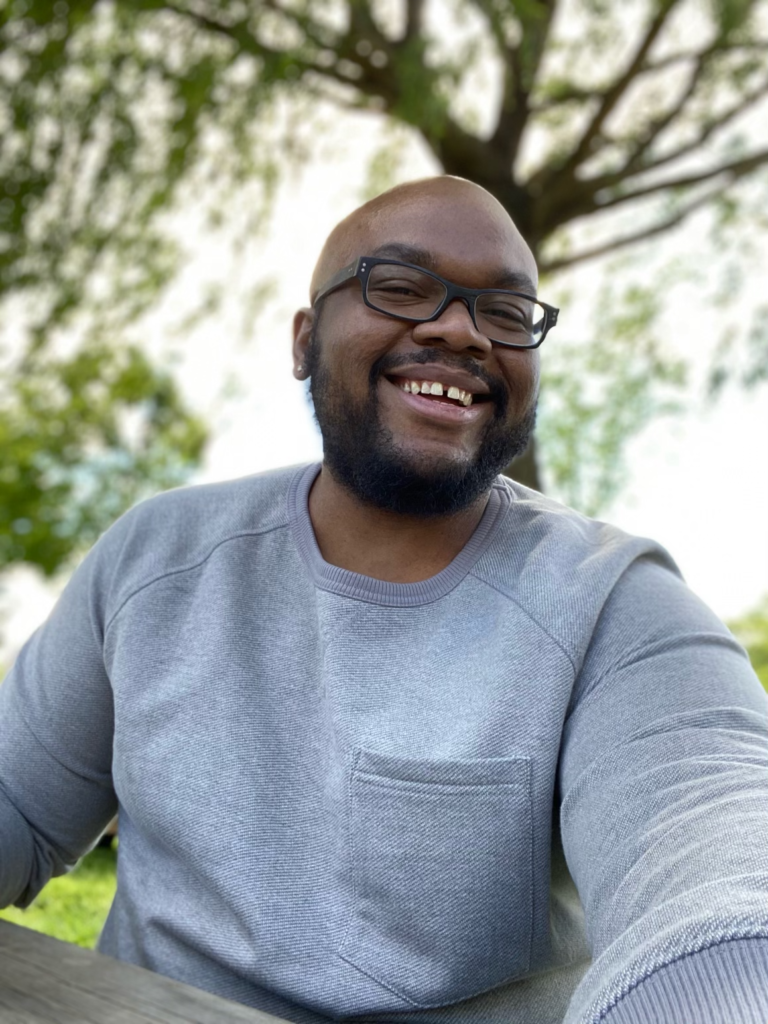
Dr. Ivory Berry, also known as “Dr. Get-Your-Life-Together,” is the Assistant Dean for Student Success for the College of Education and Human Development. He shares his no-nonsense wisdom every day in the Office of Student and Academic Affairs, and occasionally, here on the Student Success Blog.

Dr. Get-Your-Life-Together says, “Don’t neglect school bae this holiday!”

What I learned when I was a college student, and have continued to promote as a student affairs professional, is that fall/Thanksgiving break may not be the most ideal time to “break, break”.

We are all overdue for a much-needed extended break, and, as luck would have it, fall/Thanksgiving break is headed Mason’s way Wednesday, November 22 – Sunday, November 26!

Although I rarely make it home to Louisiana for major holidays or extended breaks, I’m still nostalgic about eating a slice of my play cousin’s famous sweet potato pie; listening to my favorite auntie spill the latest tea on all of the family, church, and neighborhood happenings; and watching daddy sneak away from all the festivities to take a nap in his favorite reclining chair.

The break is also a time to “kick it” with my childhood friends and high school and college classmates as well as binge watch all of my favorite shows that I’ve been neglecting as a result of late nights and early mornings in the office. And did I mention sleep? Oh yes, lots of sleep!

When I break, I break!

However, what I learned when I was a college student, and have continued to promote as a student affairs professional, is that fall/Thanksgiving break may not be the most ideal time to “break, break”. Think about it. When classes resume on Monday, November 27, there will only be two weeks remaining until the last day of classes (December 9). As such, you can’t afford to take advantage of the break in its entirety. You have to stay in the academic zone! Instructors will be ready to go into overdrive to make it through all the chapters in your textbook, and final exams and papers are on the horizon! There simply isn’t enough time to re-acclimate yourself to the depth of your course material and to the educational space, in general, if you decide to “break, break”. You’ve been laser-focused on your academics for the past 13 weeks and to “come up for air” for an extended period of time could easily throw your game off. How you approach the break can determine whether B’s turn into A’s or C’s.

I recommend you be intentional with organizing a schedule for the break in advance. Carve out some time to spend with your family, friends, and bae. They miss you and are deserving of some uninterrupted time! Also, be sure to dedicate some time to connect with yourself and recharge your internal battery through rest and relaxation. But, don’t neglect Ms. Statistics, Mr. Biology, and English bae! School bae will come back to haunt you during the semester wrap-up and finals!

That’s all for now. Enjoy your fall “break” and Happy Thanksgiving!

Peace and blessings.

Dr. Ivory Berry, also known as “Dr. Get-Your-Life-Together,” is the Assistant Dean for Student Success for the College of Education and Human Development. He shares his no-nonsense wisdom every day in the Office of Student and Academic Affairs, and occasionally, here on the Student Success Blog.

Dr. Get-Your-Life-Together says: “Adopt a Village Mindset”

Identifying a safe and inviting space to share fellowship, read, write, and be inspired by others is critical to being a successful student.

As an alumnus of the University of Illinois (PhD, 2014; MA, 2008), I’m often contacted by the University of Illinois Foundation to participate in a giving campaign or by the Graduate College to serve on an alumni panel or take a survey about my experiences at Illinois and beyond. Recently, I was contacted by the Editor of the Champaign-Urbana News Gazette, the local daily newspaper, to participate in a project celebrating 150 years of the University. Select alumni are being asked to share a specific spot on campus that comes to mind when they recall their days at Illinois. Responses will be featured in a special edition of the newspaper. I was hoping to be creative in my response and identify a spot that would resonate with the readers. In reflecting, I kept being drawn to the designated office space for teaching assistants in the Educational Policy Studies doctoral program, a spot unknown to the average student on campus or reader of the news Gazette. Here’s what I wrote in response to the editor’s prompt:

“Room 372 Education Building, formerly the Educational Policy Studies TA Office”

It was in this space where a group of PhD students of color, affectionately known as “The Village”, gathered at all hours of the day and night to support one another on the journey to the doctorate. 

It was in this space where we witnessed the academic grind and received words of wisdom from our faculty, advanced doctoral students, alumni, and each other. 

It was in this space where we grooved to the latest music blasting through our earbuds, while trying to write the perfect sentence.

It was in this space where we birthed conference papers, dissertations, cover letters, and greatness. 

It was in this space where a group of emerging scholars from different parts of the U.S. were brought together to choose community over competition and become lifelong friends…chosen family…The Village. 

This space is sacred.

I share this response for two main reasons that I hope resonate with you, especially those of you who are graduate students.

First, identifying a safe and inviting space to share fellowship, read, write, and be inspired by others is critical to being a successful student. Graduate school, in particular, is often characterized by students as an isolating or alienating experience. It is true that there are times when you’re going to need to “get ghost” to minimize distractions and be your most productive self. However, “schooling” goes well beyond taking classes, studying for exams, and writing papers. And honestly, it gets old and routine and some days you have to “dig deep” to muster up the energy to persist, especially when you’re broke and feeling broken. We need others to inspire us, “coach us up,” “charge us up,” and hold us accountable to achieving our goals. I received just that in Room 372. 

Second, we can all eat! Too often, students choose competition over community while in graduate school. The Village taught me that I could be my most competitive self while doing my part to contribute to the wholeness, well-being, and development of the Village. We believed that we didn’t have to tear one another down to shine and score some wins. We celebrated job offers even when we were in the same hiring pool. We edited each other’s fellowship applications and conference proposals even when we were applying to the same fellowships and conferences, respectively. The Village concept helped us to think beyond self. We believed that if one person in the Village was “winning,” we were all winning. Our families were winning. Our communities were winning. The Village concept kept us grounded and connected.

The African proverb says, “It takes a village to raise a child.” I’ll add, “It takes a village to raise a scholar, too!” Thus, as you continue to go forth in your academic studies, I encourage you to think about the space(s) you frequent to receive inspiration and accountability. Additionally, I encourage you to think about the ways in which you have benefited from, contributed to, and withheld from your village. Make those spaces sacred. Protect your village.

Dr. Ivory Berry, also known as “Dr. Get-Your-Life-Together,” is the Assistant Dean for Student Success for the College of Education and Human Development. He shares his no-nonsense wisdom every day in the Office of Student and Academic Affairs, and occasionally, here on the Student Success Blog.

Dr. Get-Your-Life-Together says: “We Do the Most!”

As the semester continues to ramp up, I encourage you to reflect on your multiple, intersecting identities and how they may impact your success as a student.

If I had to describe this week in two words, I’d say, “THE MOST!” Okay, I need three words, “THE ABSOLUTE MOST!” This week I’ve fired off several “Urgent Response Needed” emails, missed a couple of meetings because I was double booked and not paying close attention to my calendar, cashed in several “I need a favor” points with key partners across campus to resolve pressing student issues, counseled students through “life after academic termination,” wrote appeal decisions, prepared annual performance evaluations for my staff, and on and on and on. At one point, I found myself saying, “For my next trick, I’m going to need a volunteer…”

At times, life, work, and play can feel magical, especially in the Student Affairs profession, as we explore every possible avenue to get to a “yes” answer for students when they are distressed, need an exception, or have simply messed up and don’t know how to fix it. We put on our capes and pull rabbits out of hats. We go just that hard for YOU, although it may not always show. But this week I was also reminded of the words expressed by actor, humanitarian, and super woke activist, Jesse Williams, during the 2016 BET Awards, (albeit in a different context) yet still relevant here, “Just because we’re magic, doesn’t mean we are not real.” Real as in, just like you, we have these multiple intersecting identities that at times may appear compatible or at conflict at any given moment. We, too, identify as working professionals, students, caregivers, siblings, partners, sons and daughters, engaged citizens, and friends. Although we privilege our “working professional” identity in the workplace, it doesn’t mean those other identities suddenly disappear, and sometimes we, too, have to be honest with ourselves and give ourselves permission, guilt free, to attend to some of those other identities, because as much as we like to think of ourselves as magical, it doesn’t mean that we are not real. We feel. We love. We hurt. 

As the semester continues to ramp up, I encourage you to reflect on your multiple, intersecting identities and how they may impact your success as a student. Are you privileging your student identity? Are some of your other identities currently in conflict with your student identity? How are you managing these identities?  

Mason strives to be a model well-being university, in which members of the university community are “thriving across a range of domains (physical, career, social, community, psychological and financial) and being satisfied with one’s life while experiencing curiosity, hope, meaning and joy.” I invite you to explore the Well-Being University Initiative and reflect on how you’re promoting well-being, while managing your multiple, intersecting identities and check out some of the well-being resources and services offered at the university. 

Challenge yourself to simply BE, and BE the BEST at it. That’s all for now.

Dr. Ivory Berry, also known as “Dr. Get-Your-Life-Together,” is the Assistant Dean for Student Success for the College of Education and Human Development. He shares his no-nonsense wisdom every day in the Office of Student and Academic Affairs, and occasionally, here on the Student Success Blog.